Buying in Mountain View can feel like a math problem with real-life consequences. When prices are high and inventory moves fast, choosing between a condo and a townhome is not just about style. It is about your budget, your day-to-day routine, and what you will actually own. This guide will help you compare the tradeoffs that matter most in Mountain View so you can make a confident decision. Let’s dive in.
Why the label can be misleading
In California, a condo is a legal ownership form, but a townhome is usually an architectural description. That means two attached homes can look very similar while giving you very different ownership rights and maintenance responsibilities.
For that reason, the marketing label should never be your final test. In Mountain View, the smarter question is: what does the title say, what do the HOA documents require, and how does the property fit your lifestyle?
What you may actually own
With a condo, you usually own the interior of your unit while shared areas are governed through the homeowners association. In some communities, features like patios, balconies, and porches may be exclusive-use common area instead of land you fully own.
With a townhome, many buyers assume they own the land under the home and have fewer shared obligations. Sometimes that is true, but not always. The California Department of Real Estate notes that attached-home communities can be structured in several legal ways, including planned developments with shared rights and responsibilities.
Why documents matter more than appearance
Two homes can have the same look, same number of stories, and even similar price points, but very different rules. One project may place more repair responsibility on the association, while another may shift more upkeep to you.
California Civil Code section 4775 generally places common-area repair and maintenance on the association unless the governing documents say otherwise. That is why reviewing the CC&Rs, budget, reserve information, and HOA rules is such an important part of comparing a condo to a townhome.
How the choice affects daily life
The condo-versus-townhome decision often shows up most clearly after move-in. Your experience will depend on privacy, maintenance, and how much flexibility the community allows.
Privacy and layout
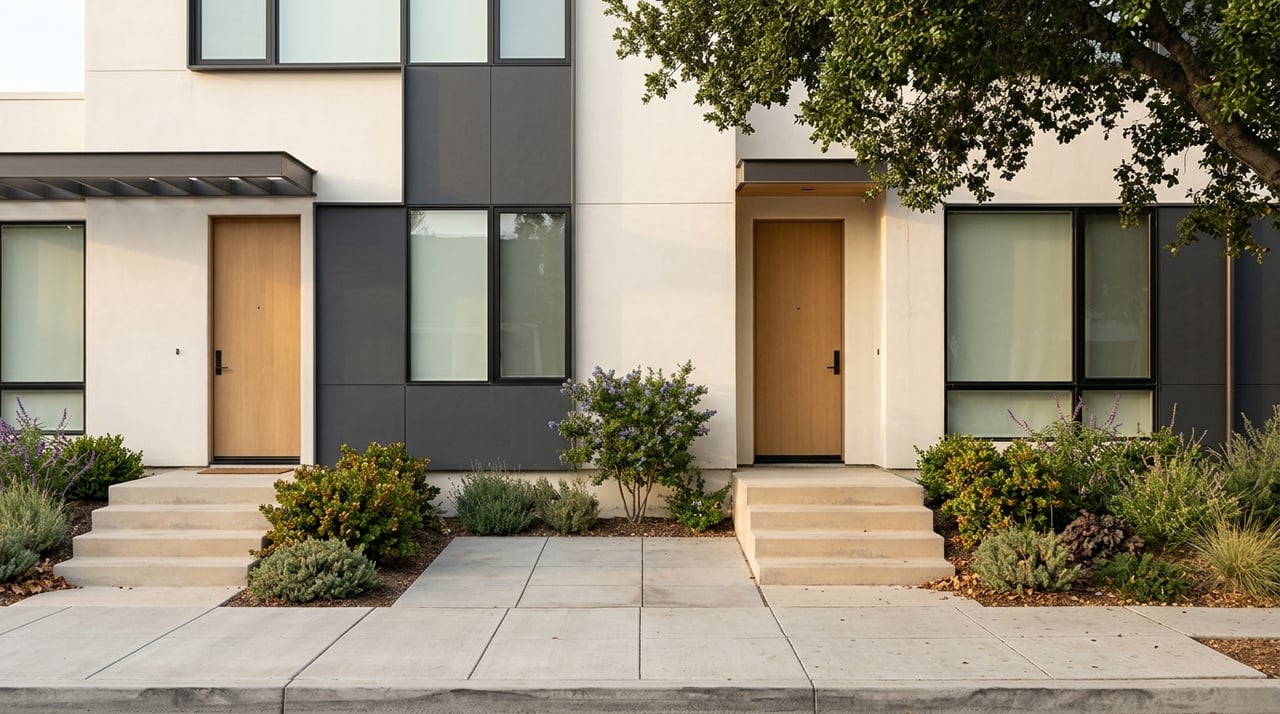
Townhomes often feel more like a house because they are commonly built as attached homes with two or more stories. That layout can create more separation between living and sleeping areas, which some buyers prefer.
But privacy is not guaranteed by the word townhome. In practice, the amount of sharing depends on the specific building layout, common walls, outdoor areas, and HOA structure. A well-designed condo may feel more private than a tightly packed townhome project.
Maintenance and monthly costs
For many Mountain View buyers, monthly carrying cost matters just as much as purchase price. HOA dues are often the biggest variable when comparing attached homes.
Higher dues are not automatically a bad sign. A condo with higher dues may cover more maintenance and come with stronger reserves, which can make ownership more predictable and less stressful. On the other hand, a townhome with lower dues may look cheaper month to month but leave you with more direct upkeep or more future risk.
Long-term flexibility
If you care about pets, rental options, parking rules, or future remodeling, the HOA documents matter a lot. CC&Rs run with the land, and they can affect how you use the property now and how attractive it may be to future buyers later.
This is especially important in a high-cost market like Mountain View, where buyers tend to think carefully about resale. A home that works well today but limits your options later may not be the best long-term fit.
Why Mountain View changes the equation
Mountain View is not a market where you can look only at the home itself. Price, commute, and micro-location all shape the condo-versus-townhome decision.
Spring 2026 data points to a competitive, high-cost market. Zillow reports an average home value of about $2.03 million and a median sale price of about $1.75 million, while Realtor.com reports a median listing price of about $1.73 million and a median 21 days on market. The exact numbers vary by source, but the message is the same: buyers need to weigh monthly cost, location, and ownership structure together.
Micro-location matters inside Mountain View
Prices can vary sharply within the city. Zillow neighborhood data ranges from about $1.08 million in Moffett Boulevard to about $3.21 million in Saint Francis Acres.
That spread is a reminder that the better comparison is not simply condo versus townhome. It is condo or townhome in a specific part of Mountain View, with a specific commute pattern, HOA setup, and pricing tier.
Commute access can tip the scales
For many buyers, attached housing in Mountain View is partly a lifestyle decision and partly a commute decision. If you want easier access to transit or major job centers, location may outweigh small differences in floor plan.
Transit Center access
Mountain View Transit Center is a major city hub with more than 12,000 weekday boardings and alightings, according to the city. It connects you to Caltrain, VTA light rail, buses, private shuttles, and MVgo service to North Bayshore, East Whisman, San Antonio, and downtown Mountain View.
If you expect to rely on transit or shuttle access regularly, a condo near these connections may make daily life simpler. In that case, lower maintenance and stronger transit access can be a powerful combination.
East Whisman and North Bayshore access
Mountain View planning documents show continued focus on East Whisman and North Bayshore as areas tied to transit-oriented and mixed-use growth. The city describes East Whisman as a highly sustainable employment center with residential and commercial uses, and North Bayshore as an area planned for innovative commercial and residential development.
For you, that means proximity to these corridors can shape convenience and future appeal. A condo or townhome near shuttles, transit routes, or key work destinations may fit better than a home with more space but a harder daily routine.
When a condo may be the better fit
A condo may work best for you if your top priorities are simplicity, predictable upkeep, and access.
You may lean toward a condo if you want:
- Lower-maintenance ownership
- Less hands-on exterior upkeep
- A more predictable monthly budget
- Convenient access to transit, downtown, or work corridors
- A straightforward first step into the Mountain View market
That does not mean every condo is easier to own. You still need to confirm what the dues cover, how strong the reserves are, and what the rules allow.
When a townhome may be the better fit
A townhome may be the stronger choice if you want a more house-like layout and are comfortable taking on a bit more responsibility depending on the project documents.
You may lean toward a townhome if you want:
- Multiple stories and more separation of space
- A layout that feels closer to a single-family home
- Potentially more room for storage or daily living
- Lower HOA dues in some communities
- A balance between attached living and house-like function
Again, the key word is potentially. In California, the legal setup can vary, so you should confirm ownership boundaries and maintenance duties before assuming a townhome gives you more control.
A smart Mountain View comparison checklist
Before you choose between a condo and a townhome, compare each option using the same set of questions.
Questions to ask on every property
- What does the title say you own?
- What areas are common area or exclusive-use common area?
- What do the HOA dues cover?
- How healthy are the reserves?
- Are there pet, rental, parking, or renovation limits?
- Who handles exterior maintenance and repairs?
- How close is the property to Mountain View Transit Center, San Antonio station, or MVgo routes?
- How does the monthly carrying cost compare after HOA dues are included?
This kind of side-by-side review helps you move past the label and focus on the real ownership experience.
The right fit is the one that matches your life
In Mountain View, the best choice is usually less about whether a home is called a condo or a townhome and more about the details behind it. Ownership structure, HOA strength, monthly cost, and commute access often matter more than the name on the listing.
If you are a first-time buyer, a condo may offer the easier path with simpler maintenance and budgeting. If you are looking for a more house-like feel, a townhome may be worth the extra review. Either way, the best decision comes from reading the documents carefully and weighing the location just as closely as the floor plan.
If you want a calm, analytical second opinion on Mountain View condos or townhomes, magic li can help you compare the numbers, the disclosures, and the real-life tradeoffs with clarity.
FAQs
What is the main difference between a condo and a townhome in Mountain View?
- In Mountain View, the biggest difference is often the legal ownership structure and HOA responsibility, not just the building style. A condo is a legal ownership form, while a townhome is usually an architectural description.
What should Mountain View buyers review before choosing a condo or townhome?
- You should review the title, CC&Rs, HOA rules, budget, reserve strength, maintenance responsibilities, and any limits on pets, rentals, parking, or renovations.
Are townhomes always better for privacy in Mountain View?
- Not always. Townhomes often have a more house-like layout, but privacy depends on the specific project design, shared walls, outdoor spaces, and HOA structure.
Can a condo be a smarter financial choice in Mountain View?
- Yes. A condo can be a smart fit if the HOA covers more maintenance, the reserves are strong, and the location supports your commute and lifestyle.
Why does location matter so much when comparing condos and townhomes in Mountain View?
- Location affects value, commute convenience, and daily routine. Access to Mountain View Transit Center, San Antonio station, MVgo routes, East Whisman, and North Bayshore can all influence which property feels like the better fit.
How fast is the Mountain View housing market for attached homes?
- Spring 2026 data points to a competitive market, with Realtor.com reporting a median 21 days on market and pricing sources showing Mountain View remains a high-cost city overall.